8 Key Benefits of Pet Therapy for Mental & Physical Wellbeing
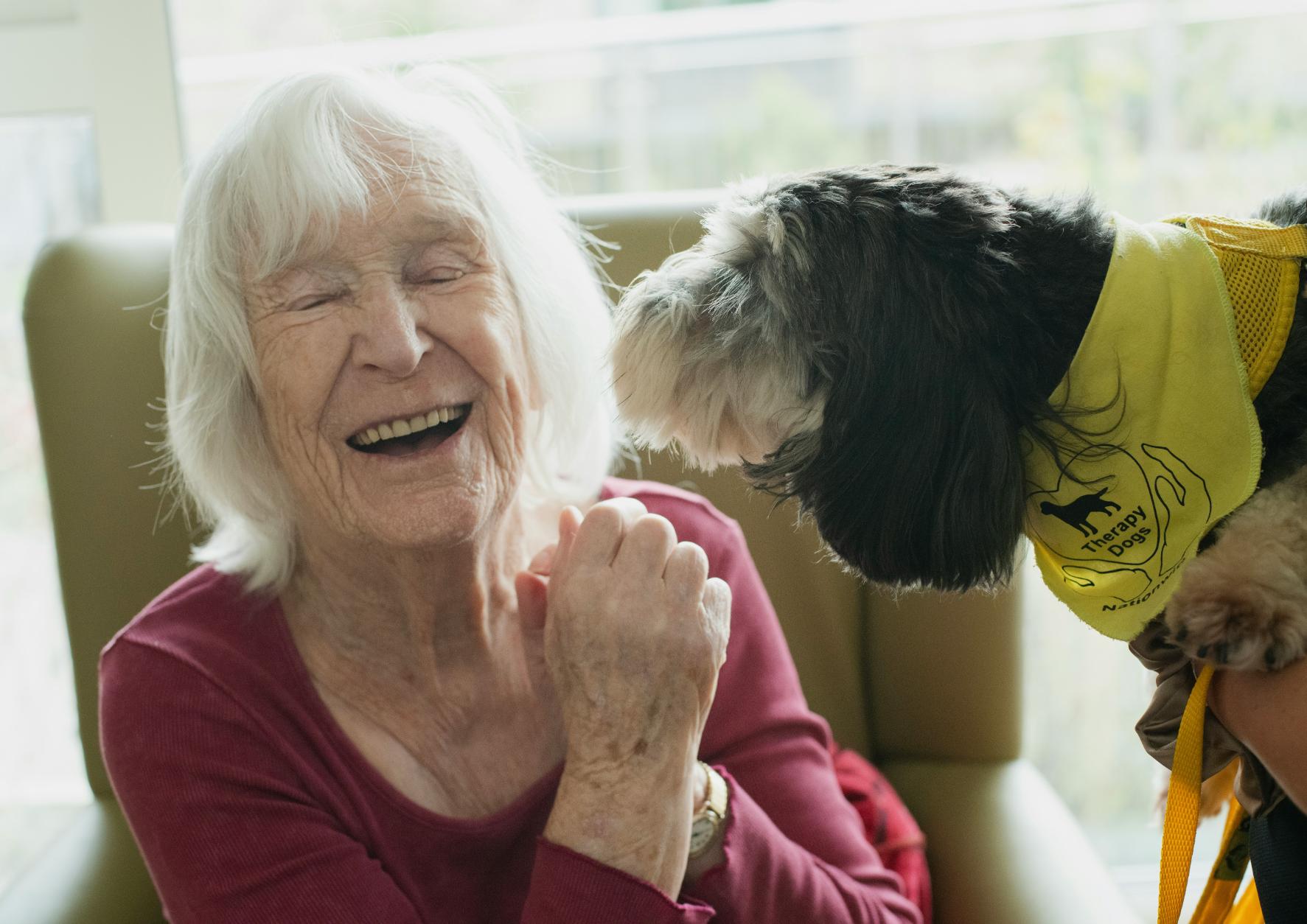
You may have seen photos of elderly people smiling with dogs, rabbits and even ponies, but did you know about the many benefits that come with it? In this blog, we'll be looking beyond the cute and fluffy friends that make pet therapy possible, and delve into the psychological and physical benefits it can have for care home residents.
What is Pet-Assisted Therapy?
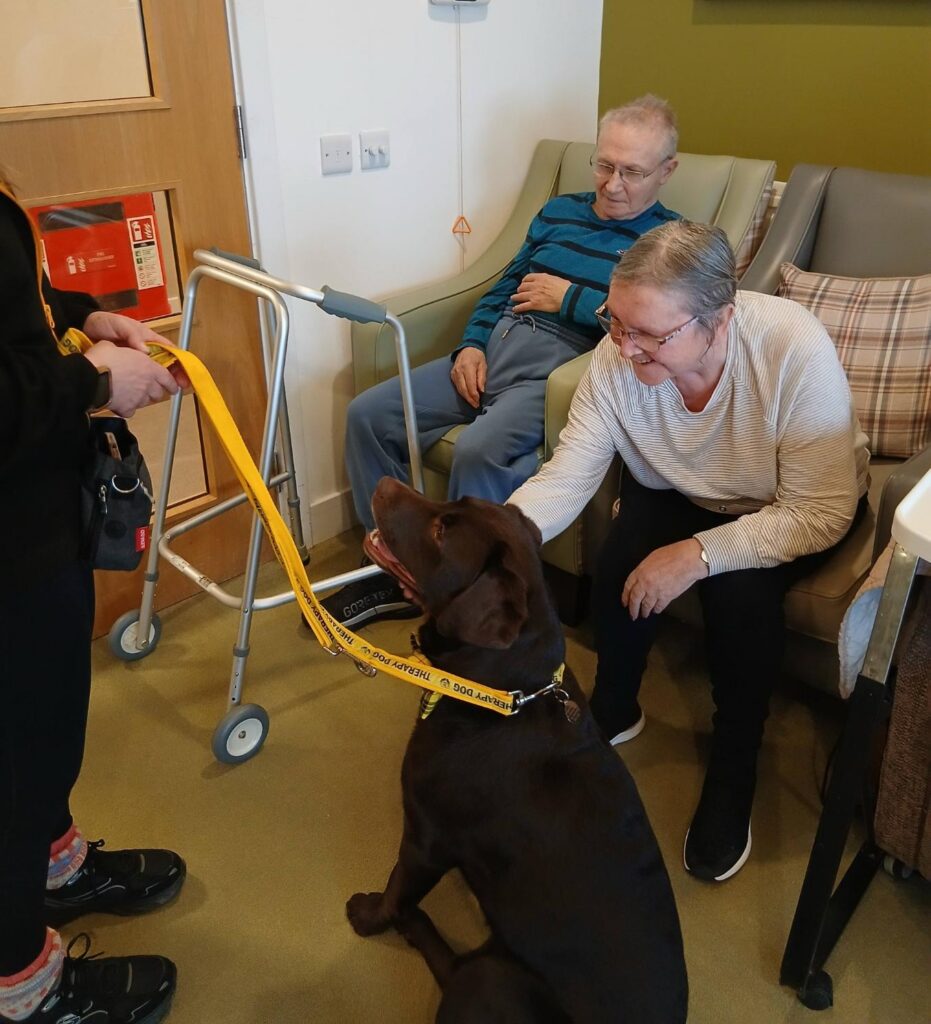
Pet-assisted therapy in care homes, also known as Pet Therapy, is a program or activity where trained animals and their handlers visit residents to support their emotional, social and physical wellbeing. Going further than casual pet visits, these sessions are often guided by care staff and may involve activities such as gentle petting, guided interaction or simple exercises that encourage movement and communication.
These animals are most commonly dogs, cats, rabbits or small ponies, but could even be exotic animals or birds. Realistic fake animals are another option for pet therapy, whether using stuffed animals or robotic moving ones. These are usually offered to people living with dementia and can receive a similar reaction to real animals but eliminate challenges such as allergies or animals becoming spooked. In a care home setting, pet-assisted therapy provides comfort, companionship, and a sense of purpose, contributing positively to overall quality of life.
Benefits of Pet Therapy
Physical Health
Gentle interaction with animals, such as stroking or walking a therapy dog, has been shown to lower blood pressure and heart rate by promoting relaxation and reducing stress. Over time, these calming effects can help boost cardiovascular health and support overall heart function. The mental and emotional health benefits brought by animals also have knock-on effects for residents physical health.
Encouraging movement
Pet therapy in care homes encourages gentle movement in a way that feels natural and enjoyable rather than like formal exercise. Taking gentle walks with a well-trained dog can motivate residents to move around and enjoy fresh air, particularly if the care home has a secure, navigable garden with accessible paths. These short walks help promote mobility, flexibility and balance while providing a sense of purpose and companionship.
Even simple actions, such as stroking an animal, encourage soft arm and shoulder movements while holding or caring for a small pet can support hand-eye coordination and maintain fine motor skills. Through these relaxed activities, residents stay physically active in a safe and supportive environment.
Social Connection
Pet therapy in a care home can significantly enhance social connection by bringing people together in a shared, positive experience. The presence of an animal stimulates conversations between residents, as well as with families and staff, creating natural opportunities to share stories, memories, and laughter. These discussions frequently continue even after the animal has left, helping to break down barriers and foster a more engaging, vibrant environment.
Increased social interaction supports emotional wellbeing, reduces feelings of isolation and strengthens relationships within the home. Additionally, having varied activities like pet therapy to look forward to adds interest and structure to daily life, contributing to a more stimulating and enjoyable routine for residents.
Combating Loneliness
Pet therapy can play a powerful role in combating loneliness in care homes by offering residents companionship that feels warm, safe and reassuring. The unconditional love and affection shown by an animal can help ease feelings of isolation, providing comfort without expectation.
Many people, particularly those living with dementia or those who are naturally shy, often find it easier to interact with a pet than with other people, as animals communicate through simple, calming presence rather than complex conversation. As non-judgmental companions, therapy animals offer consistent acceptance, helping residents feel valued, understood, and less alone.
Reminiscence Opportunities
Pet therapy in care homes can gently spark reminiscence, particularly for residents living with dementia. Interacting with an animal often triggers memories of past pets, family life, or earlier experiences of caring and companionship. These familiar feelings can help unlock conversations and encourage residents to share personal stories that might otherwise remain unspoken.
For individuals with dementia, sensory experiences such as stroking soft fur or hearing a gentle bark can stimulate long-term memories, which are often better preserved than short-term recall. This sense of connection to the past can promote identity, boost confidence, and create meaningful moments of clarity and joy.
Emotional Wellbeing
Pet therapy in a care home can significantly boost emotional wellbeing by supporting residents in a warm and holistic way. Reducing stress and loneliness does wonders for mental health and the calming presence of an animal can help lift mood and ease anxiety. The joy of companionship, even in simple moments of stroking or sitting quietly together, brings comfort and a sense of connection.
Incorporating pet therapy into a varied lifestyle also makes daily life more enjoyable and engaging, giving residents something positive to look forward to. As part of a holistic approach to care, pet therapy nurtures emotional, social, and psychological wellbeing alongside physical health, helping residents feel happier and more fulfilled.
Stress and anxiety reduction
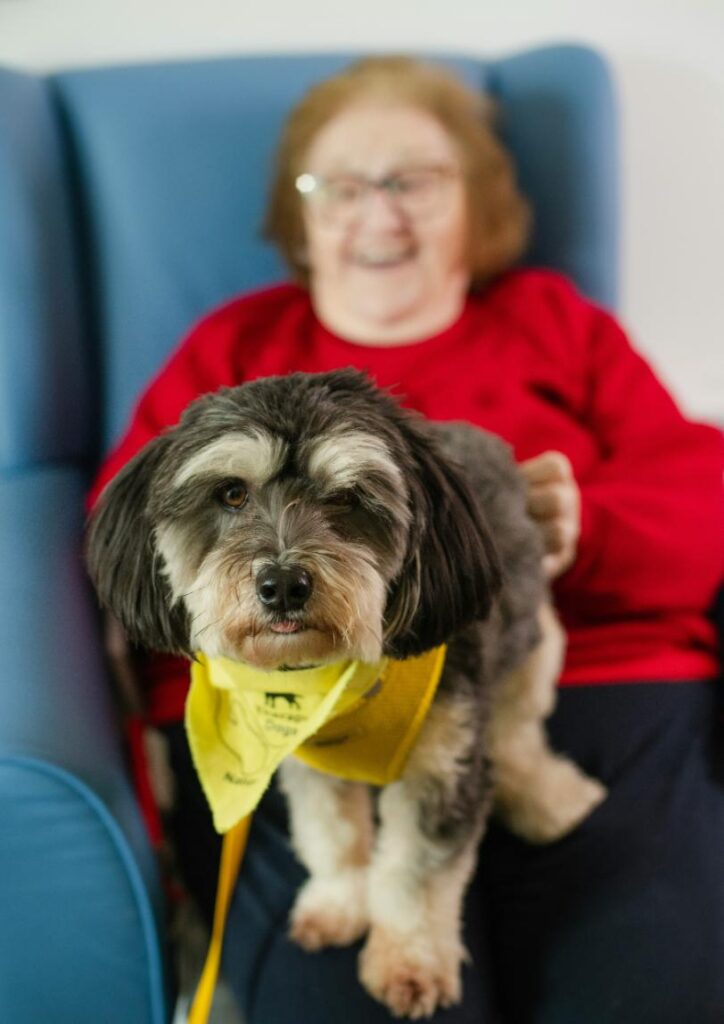
Pet therapy in care homes can play an important role in reducing stress and anxiety among residents. Petting or cuddling animals has been shown to lower cortisol levels, the hormone associated with increased stress, which can be particularly beneficial for residents adjusting to a new environment or coping with ongoing health issues.
Playing with an animal also provides a mindful activity that helps shift focus away from negative thoughts. By concentrating on the warmth and presence of the animal, residents can experience a sense of calm that reduces anxiety and eases everyday worries.
Opportunities for learning
Pet therapy in care homes can offer residents engaging opportunities for learning and mental stimulation. Learning about different types of animals, especially when more exotic species visit with an expert, sparks curiosity and supports brain function. The responsibility of holding or gently caring for a delicate animal provides a sense of purpose and fulfilment, helping residents feel capable and confident. These interactive experiences encourage mental engagement, build knowledge and give residents rewarding tasks that stimulate both the mind and the senses.
In Summary
Pet therapy may not be suitable for every care home, depending on allergies, availability and preferences of residents. However, safe and regulated pet therapy can have a huge positive impact on residents physical and psychological wellbeing.
Care Home in Clydebank
Here at Kingsacre Care Home in Clydebank, we offer a varied entertainment and activities programme including pet therapy, arts & crafts and group sessions. We build strong connections with our residents which helps us to provide the highest standards of personalised care for both respite care stays and those receiving more long-term care. If you’re looking for quality care in Clydebank, please get in touch with our friendly team today to chat about how we can support you or your loved one.